
Insights / Business
What goes in a facilitation proposal and scope of work?
A quote gives a number. A proposal gives the number and everything it buys, in writing, before the work starts.
By McKinley Malbrough III, J.D., MS-HRM. Published October 22, 2026. Last reviewed October 22, 2026.
Short answer
A facilitation proposal is the written offer that fixes what the client gets for the price: the outcome, the deliverables, the hours of preparation, the number of revisions, the cancellation and rescheduling terms, and who owns the recording and materials. The price is the last line. Everything above it is what keeps the price true.
Built for this situation
Take it with you
Online Facilitation Skills gear
Made to order. Returns terms are on the Refunds page.See all gear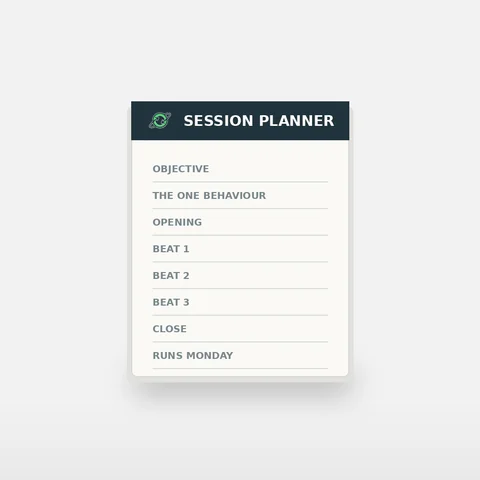
Who this is for: Independent facilitators and trainers who quote workshops, and the HR leaders and L&D managers who approve those quotes.
This article offers general information, not legal advice. Laws change and facts vary, so confirm how they apply to your situation.
What is a facilitation proposal, and what is it not?
A quote gives a number. A proposal gives the number and what it buys. The scope of work is the part that says what will be done, by whom and by when, and once both sides sign it, it becomes the agreement. Procurement teams may call it a statement of work. The test is the same: could a finance reviewer who was not on the call tell what the fee covers?
A proposal is not a brochure, a deck of past work or a rate card. Write the scope before you say a number, as I argue in the price you quote is the scope you agree to.

What goes in the scope of work?
Seven items cover almost every engagement. Each needs a count, a date or a name.
- One sentence of outcome: by the end, participants can do a specific thing. If you cannot write it, run a needs analysis first
- Audience and planned headcount, such as 20 participants, with a rate for anyone added
- Format, length and platform, such as four hours live online
- Preparation, stated in days, and deliverables with delivery dates
- Revisions: one round, requested in writing by a stated date
- Client inputs, and the date they are due
- Fee, with platform and materials at cost on a separate line
Attach the one-page session plan to show how the time is used. This scope is a hypothetical. It uses the half-day workshop and illustrative $2,000 day rate from the pricing article and describes no past engagement.
| Item | What the client gets | Limit |
|---|---|---|
| Outcome | Each manager can give one piece of specific feedback | One outcome |
| Session | Half day, live online, 20 planned participants | 4 hours, 1 session |
| Preparation | Sponsor call, design, three scenarios built from the client’s description, platform check | 0.75 day, one 45 minute call |
| Follow-up | None included. A written summary can be added | Billed at the day rate, pro rated |
| Client inputs | Attendee list and platform link | Five business days before |
| Fee | Facilitation, design and preparation: 1.25 days at $2,000, or $2,500. Platform and materials at cost: $150 | $2,650 total, $75 per added participant |
A written scope also does legal work for an independent facilitator. California treats a person who provides services for pay as an employee unless the hiring entity shows three things, including that the person is free from its control (Labor Code section 2775). A business-to-business exemption in section 2776 lets the multifactor Borello test decide instead when twelve criteria are met. One is a written contract stating the payment amount and due date. Others include setting your own hours and negotiating your own rates. A scope with a fee and payment terms supplies the written part and only that part.
How do you write deliverables so the price holds?
Name a noun, a count and a date for every deliverable. Vague words are where unpaid work enters. The formula in how to price a workshop adds design, preparation, delivery and follow-up days, then multiplies by a day rate. Every day in that sum needs a line in the scope. A day the scope does not mention is a day the client assumes is free.
| Vague wording | Wording that holds |
|---|---|
| Preparation as needed | Up to 0.75 day of design and preparation, including one 45 minute sponsor call. More is billed at the day rate, pro rated |
| Follow-up support | One written summary within five business days of the session. Coaching is not included |
| Revisions until you are happy | One round of changes, requested in writing within five business days of receiving the draft |
Add a late-input clause: if inputs arrive after the stated date, the delivery date moves by the same number of days. When the client pushes back on price, change the scope, not the rate. The buyer’s side is in what a corporate facilitator costs.
What cancellation and rescheduling terms protect both sides?
A held date has a cost: you turned other work away and may have finished the preparation. Write a schedule that rises as the date nears. This is a hypothetical to adapt:
- More than 14 days before the session: no fee
- Within 14 days: 50 percent of the facilitation fee
- Within three days: 100 percent of the facilitation fee, plus platform and materials costs as incurred
Make it mutual. If you cancel, the client gets back every amount paid for work not delivered, and you offer the next available date at no charge. Allow one reschedule with 14 days’ notice at no fee, and treat a second as a new booking.
Tie the numbers to real cost. In a business contract, California enforces a liquidated damages clause unless the party challenging it shows it was unreasonable when the contract was made (Civil Code section 1671(b)). Certain consumer contracts follow a different test under subdivision (c), so this describes business clients. A fee tied to the held date and work done is easier to defend than a round number.


Who owns the recording, slides and materials?
Name an owner for four piles: your methods and templates, the client’s content, materials built for this engagement, and the recording. A common arrangement is that you keep your methods and materials and the client receives a written license to use them inside its organization. Say what the license allows. Letting the client train others with your material is a different product at a different price.
If the client expects to own something, put it in a signed writing. A transfer of copyright ownership is not valid unless an instrument of conveyance, or a note or memorandum of the transfer, is in writing and signed by the owner (17 U.S.C. section 204(a)). Be careful with the phrase work made for hire. When a commissioned work is created under a signed agreement that calls it a work made for hire and the commissioning party takes all the copyright, California treats that party as the creator’s employer for workers’ compensation and unemployment insurance purposes (Labor Code section 3351.5(c), Unemployment Insurance Code section 686). That is why many agreements use a license or an assignment instead. Ask counsel which fits.
The recording needs its own sentence: who holds the file, who may watch it and for how long. California consent rules apply, so read recording consent in training before you promise a replay.
What should a client ask for before approving a proposal?
Five questions make quotes comparable. The longer list is in what a corporate facilitator costs.
- What is not included? A scope that lists exclusions is a scope someone thought through
- How many hours of preparation are in the fee, and what happens if the work needs more?
- What is the last date to cancel or move the session without a fee?
- Who owns the recording and the materials, and what may we do with them?
- What do you need from us, and by when?
Answers in writing beat answers on a call. Buyers who send these questions to several facilitators at once can use a facilitator RFP. For what the work looks like once approved, see facilitation services.
Facilitation proposal FAQ
What is the difference between a facilitation proposal and a scope of work?
The proposal is the whole offer: approach, scope, fee and terms. The scope of work is the part listing what will be done, by whom and by when. Clients often attach it to the contract.
How many revisions should I include?
One round, with a date by which the client must request it. A second round is billed at the day rate, pro rated.
Should the price come first or last?
Last. Write the scope, then add up the lines. A number said before the scope sets an expectation the scope has to fit.
Do I need a lawyer to review the terms?
Have counsel review payment, cancellation, ownership and classification terms before you use them. This page is general information, not legal advice.
Write the scope before the next number
Take the last quote you sent and mark every hour it does not mention. Rewrite it as a one-page scope like the table above. For a second pair of eyes, send it through the contact page or book a free consult. The plan behind the scope is the facilitation session plan template.
Where these numbers come from
| California Labor Code section 2775 (official text) | Accessed October 22, 2026. Text read through California Public Law. Subdivision (b)(1), the three conditions. Confirm against the official text. |
| California Labor Code section 2776 (official text) | Accessed October 22, 2026. Text read through California Public Law. Subdivision (a), the twelve criteria. Confirm against the official text. |
| California Civil Code section 1671 (official text) | Accessed October 22, 2026. Text read through California Public Law. Subdivisions (b) and (c). |
| 17 U.S.C. section 204, execution of transfers of copyright ownership (GovInfo) | Accessed October 22, 2026. Subsection (a). |
| California Labor Code section 3351.5 (official text) | Accessed October 22, 2026. Read at the official site. Subdivision (c). |
| California Unemployment Insurance Code section 686 (official text) | Accessed October 22, 2026. Read at the official site. |
| How to price a workshop (this site) | The formula, the illustrative $2,000 day rate and the sample pricing block. The scope table above is a hypothetical built on them. |
All sources accessed October 22, 2026.
McKinley Malbrough provides education and is not an attorney. Contacting him creates no attorney-client relationship. If you have a legal question or need legal advice, contact an employment attorney.
Keep going
Training needs analysis for a small team
Settle the outcome before you write the scope.
Recording consent in training
What to settle before you sell replays.
Facilitation session plan template
The one-page plan that sits behind the scope.
What a corporate facilitator costs
Published ranges, cost drivers and quote questions.