
Field notes / Practice
How to start facilitator training without a certificate: a 30-day plan
You do not need a credential to begin. You need to watch good facilitation, design a short session, run it for real people and ask for feedback. Thirty days is enough to do all four.
By McKinley Malbrough III, J.D., MS-HRM. Published November 6, 2026.
Short answer
Spend week one observing, week two designing a 20-minute session, week three running it with real people, and week four collecting feedback and revising. At the end you have one tested session, notes on what worked and a clear idea of what to learn next.
Built for this situation
Take it with you
Online Facilitation Skills gear
Made to order. Returns terms are on the Refunds page.See all gear
Do you need a certificate to start facilitating?
No. There is no required credential to run a session. What gets people hired or trusted is evidence that they can run a room, which means a session you have actually run and feedback from people who were in it. I cover the routes in how to become a training facilitator, and the certificate question in facilitator certification online.
A plan with practice in it builds that evidence. This one takes about 30 days and an hour or two a week.

Week 1: What should you observe?
Watch how good facilitators work and write down what they do, not what they say. Attend two or three meetings or sessions, live or recorded, and take notes on a simple sheet:
- How the session opened, and how long before everyone spoke
- How the facilitator asked questions and how long they waited for answers
- What happened when someone dominated or nobody spoke
- How the session closed and what people left with
Then name three moves you want to borrow. Be specific: “She waited ten seconds after asking, and then someone answered.” Those three moves become part of your first design.
Week 2: How do you design a 20-minute session?
Pick a small topic and a small group, such as your own team or a study partner group. Write the outcome in one line, then block out the time:
- 3 minutes: an opening question everyone answers in writing
- 5 minutes: a short explanation of one idea
- 8 minutes: an activity where people use the idea, in pairs or small groups
- 4 minutes: a close where each person commits to one action
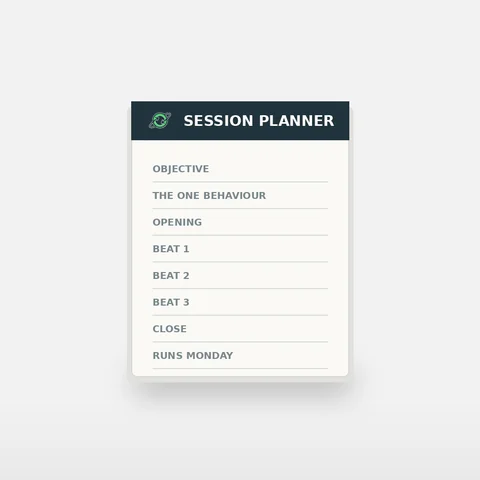
Write the exact words you will use for each question. The session planner gives you a template, and how to build a timed agenda for a virtual workshop explains the timing logic.
Week 3: How do you run the practice session?
Run it with three to eight real people, live. Tell them it is a practice session and that you want honest feedback. Record it if everyone agrees, because watching yourself teaches more than remembering.
During the session, use your three borrowed moves on purpose. Ask the question, then wait. If you lose your place, say so and carry on. Nobody expects a polished run the first time, and a calm recovery is a skill worth practicing.

Week 4: How do you get useful feedback and revise?
Ask each participant three questions, in writing, within a day:
- What was the clearest moment, and why?
- Where did you lose the thread or feel unsure what to do?
- What is one thing I should change next time?
Add your own notes from the recording. Then revise the design and run it again with a different group if you can. Two runs teach more than one run and a long think. At the end of the month, write down what you learned and the one skill to work on next, such as handling dominant voices, running breakouts or closing with decisions.
Where do you go after the 30 days?
Choose the next skill from your notes and practice that one. If you want feedback from an experienced facilitator, structured practice and a group to learn with, a course gives you that faster than going alone. The live sessions at Online Facilitation Skills are built around practice and feedback. See the dates on the events page.
Run your first session this month
A certificate says you attended. A tested session says you can run a room. Thirty days of observing, designing, running and revising gives you the second one.
When you are ready for practice with an experienced facilitator, Book a course and choose the session that fits where you are.
Keep going
How to become a training facilitator
The routes in and what gets people hired.
Facilitator certification online
What a certificate does and does not do.
Session planner
A template for the 20-minute design.