
Insights / Learning and development
How do you build a train-the-trainer program for a small business or nonprofit?
A small organization can grow its own trainers in about a year without a training department. Here is a quarter-by-quarter plan and the decisions behind it.
By McKinley Malbrough III, J.D., MS-HRM. Published October 29, 2026. Last reviewed October 29, 2026.
Short answer
List the sessions you buy repeatedly, pick one topic your own people know best and choose three respected trainers from different functions. Over four quarters, train them, co-deliver, let them deliver alone with peer feedback, then review the results. Keep legal and specialist topics with qualified providers and buy outside help where it adds the most.
Built for this situation
Take it with you
Online Facilitation Skills gear
Made to order. Returns terms are on the Refunds page.See all gear
Who this is for: Owners, operations leads and program directors at small businesses and nonprofits who want to bring recurring training in house.
When does building your own trainers make sense?
Build internal trainers when the same topics come back each quarter and an outside vendor teaches them each time. If you repeat a session three or more times a year, an internal trainer can cover it at a lower ongoing cost and with more knowledge of your work. Below that, buying a session is usually the better choice.
That threshold matches the guidance in what train the trainer actually takes, which lays out the skills a trainer needs. This page is the build plan: what to do in which quarter, for a small business or nonprofit with a few dozen to a couple of hundred people.
Start by listing what you pay outside vendors for now. Write each topic, how often it runs and who attends. The list usually shows two groups: topics only a specialist can teach and topics your own people know better than a stranger does. The second group is where your first internal trainers will work.
Which topics should insiders teach first?
Start with topics built on your own tools, rules and customers: onboarding, how your systems work, your service standards and your internal processes. An outsider has to learn that before they can teach it, and a coworker already knows it.
Keep required legal training, such as harassment prevention, with a qualified provider unless a qualified person on your staff is ready to teach it. The rules for who can deliver that training are specific, and California harassment training requirements explains what the law asks. A topic that carries legal weight is a poor first project.
Pick one topic for the first quarter. A small win teaches the organization how the program works before you ask for more.

Who should you choose as trainers?
Choose people who are respected by peers, willing to learn and spread across different parts of the organization. The best trainer is rarely the most senior person. It is the one others already ask for help.
Aim for three people, as the sibling page suggests, so a single departure or a busy season does not end the program. Spread them across functions so training does not become one department’s job. Ask each person, and get their manager’s agreement to protect time. Without protected time, the program ends the first time work gets busy.
Treat the role as a development opportunity. Many people want to build facilitation skills, and how to become a training facilitator shows the path. A trainer who sees the role as growth will put in more care than one who was told to do it.
What does a four-quarter ramp look like?
Quarter one is training the trainers. Quarter two is a supervised first session. Quarter three is solo delivery with feedback. Quarter four is a review and a second topic. The plan below is an example to adapt.
- Quarter one. Choose the topic and the trainers. Run a short facilitator workshop with outside help, covering objectives, activities and managing a room. Each trainer drafts a session plan.
- Quarter two. Each trainer co-delivers the session with a peer or an outside coach observing. Collect feedback from participants using two or three short questions.
- Quarter three. Trainers deliver on their own. A peer observes one session per trainer and gives written notes within a week.
- Quarter four. Review results against the goal you set, update the material and add a second topic. Decide whether to renew the outside help or stop it.
Here is a hypothetical comparison, using made-up numbers only to show the logic. If an organization pays an outside vendor a fixed fee for four sessions a year, the internal option costs the facilitator workshop plus trainers’ paid time. The savings come in the second year, when the workshop cost is behind you and the sessions continue. Put your own figures into the same comparison before you decide.

How do you keep quality up without an HR department?
Use the same session plan, the same feedback questions and the same short checklist for each trainer. Standard tools make quality visible, so a small team can manage it without a specialist.
- Keep one shared folder with the plan, slides, facilitator notes and handouts for each session.
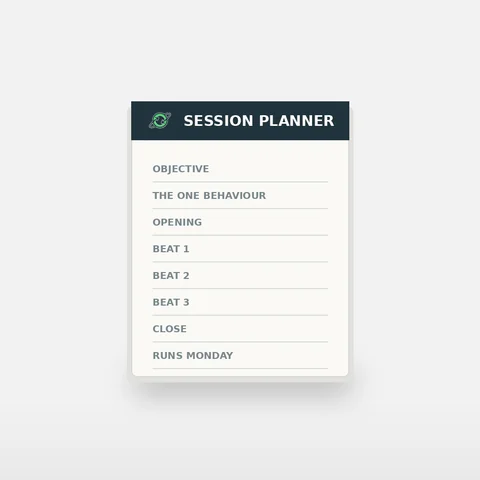
- Use a one-page facilitation session plan so the group writes plans the same way.
- Ask participants the same two questions after each session and review the answers together each quarter.
- Set a result to track, such as the behavior you want to change at 30 days, as in how to measure whether training worked.
- Meet as a trainer group twice a year to share what worked.
For a plan that fits an organization under 150 people, a learning and development strategy for under 150 employees sets out the wider picture.
What should you still buy from outside?
Buy what is rare, risky or required to be delivered by a qualified person, and buy a fresh perspective once a year. Internal trainers are strong on context and weaker on topics where they have not lived the problem.
Specialist topics, legal training and anything with high stakes for the organization fit that description. An outside facilitator can also be useful for the sessions where your own leaders have a stake in the outcome, which how to hire a facilitator explains. The goal of a train-the-trainer program is to spend outside money where it adds the most, not to stop spending it.
Train-the-trainer FAQ
How many trainers does a small organization need?
Three is a good starting number, spread across functions, so one departure or a busy season does not end the program.
How much time does a trainer need?
It depends on the topic. Plan for preparation time, delivery time and a short review after each session, and get the trainer’s manager to protect those hours in writing.
Can a nonprofit use volunteers as trainers?
Yes, if they know the material, have time and receive the same plan, checklist and feedback process. Check any rules that apply to your volunteers before you assign required training to them.
Do this week
Write the list of sessions you buy outside each year, with the topic, how often it runs and who attends. Circle the one your own people know best. For a second read, book a free consult or use the contact page.
Where these numbers come from
| IAF Core Competencies | International Association of Facilitators. Includes building and maintaining professional knowledge and knowing a range of facilitation methods. |
All sources accessed October 29, 2026.
McKinley Malbrough provides education and is not an attorney. Contacting him creates no attorney-client relationship. If you have a legal question or need legal advice, contact an employment attorney.
Keep going
What train the trainer actually takes
The skills and the minimum team.
In-house vs outsourced vs off-the-shelf training
Choosing a delivery model.
A learning and development strategy for under 150 employees
The wider plan.
How to become a training facilitator
The path for new trainers.