
Insights / Learning and development strategy
Why does training not stick, and what can the facilitator fix before and after the session?
The session went well. People took notes, said it was useful and went back to their desks. Three weeks later nothing is different. The room did its job. The workplace undid it, and that part can be planned for.
By McKinley Malbrough III, J.D., MS-HRM. Published November 11, 2026.

Short answer
Training sticks when the workplace supports the new behavior, and most of that support is arranged outside the session. Seven habits undo training: unbriefed managers, no protected practice time, mixed signals from managers, systems that reward the old way, a plan that ends at the session, no owner afterward and no follow-up. A facilitator fixes them with a manager briefing before, practice and a dated commitment during, and two check-ins after.
Built for this situation
Take it with you
Online Facilitation Skills gear
Made to order. Returns terms are on the Refunds page.See all gear

What client problem does this solve, and which tool fixes it?
The client problem. An HR lead or L&D manager pays for a good session and sees no change in how people work. Leaders conclude the training did not work, and the next request for budget gets a no.
How this article fixes it. It names the seven workplace habits that undo training and gives the facilitator one move for each, placed before, during or after the session.
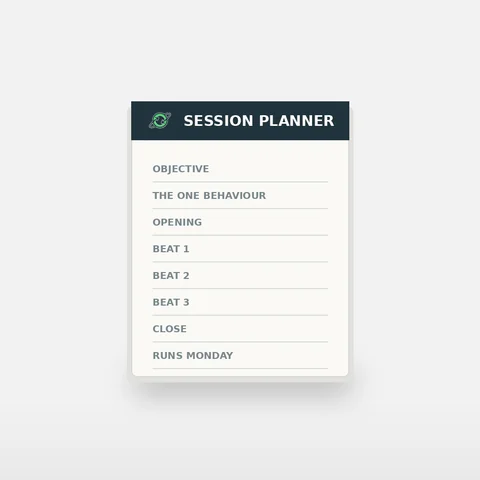
The tools. The free Live Session Design Canvas and Run-of-Show ($0+) puts the follow-through on the same page as the agenda. To show leadership what changed, the Training Evaluation Kit: Learning, Not Completion ($29) sets up the evidence. If you want the follow-through designed with you, Book a free consult.


Why does training fail to change behavior at work?
Researchers have studied this for decades. Baldwin and Ford's 1988 review of transfer of training, published in Personnel Psychology, grouped the causes into three sets: the traits of the learner, the design of the training and the work environment the learner returns to. The session covers only the second.
That is the useful point for a facilitator. A well designed session can still fail because of the other two, and the work environment is the one you can influence most cheaply. The habits below all live there.
Which seven habits undo training?
Each habit is a question you can ask your sponsor before you agree to deliver. If the answer is no, you have found the risk early.
- Unbriefed managers. Does the manager know what the person is learning and what to expect afterward?
- No protected practice time. Can people try the new skill in the first week, or does the backlog swallow it?
- Mixed signals. Will managers model the new behavior or quietly undo it?
- Systems that reward the old way. Do the tools, targets and approvals still push people back to the old habit?
- A plan that ends at the session. Is anything scheduled for the weeks after?
- No owner afterward. Who owns the program once delivery is finished?
- No follow-up. Would anyone notice if nothing changed?
Most programs have three or four of these at once. You do not need to fix all seven. Fix the two that cost the most.
What does the facilitator do before the session?
Hold a 15 minute briefing with the participants' managers. It is the cheapest fix on the list, and it addresses the first three habits together. Cover four items:
- What the session will teach, in one sentence
- The one behavior you want to see afterward
- What the manager should do in the first week, such as asking for a demonstration or clearing an hour
- What the manager should not do, such as assigning a deadline task the same afternoon
Then ask the sponsor one question about the fourth habit: what in the current process rewards the old way? If the answer is a target or a tool, name it in your design notes. You may not be able to change it, but you can tell people about it in the room instead of letting them find out on Monday.
What belongs inside the session so it carries over?
Build the follow-through into the agenda, not into a closing slide. Three elements do the work:
- Practice on real work. Participants try the skill on a case from their own job, not a made-up one.
- One commitment, written. Each person writes one specific action, the date and who will see it.
- A manager note. Each person writes two sentences for their manager on what they learned and what they need.
The commitment is the most important. A vague intention like “give better feedback” fades. “Give feedback to Sam on Thursday using the three step script” gets done or visibly does not.


What happens in the 30 days after?
Schedule two touchpoints before the session ends. At seven days, send each person a short check-in: did you try it, what got in the way. At 30 days, hold a 30 minute group conversation about what changed and what it took to get there.
Name an owner for both. Without a name, the check-ins slide, and the sixth and seventh habits take over. If your engagement includes a final check, say so in the scope. My own method includes a thirty day check for this reason.
How do you show that the habits changed?
Count behavior, not attendance. Ask managers what they have seen, ask participants what they tried and compare both with the commitments written in the room. Then tie it to one business measure if you can.
The method is in how to prove the return on training, and the workbook behind it is the Training Evaluation Kit. A small honest result, such as “eight of twelve people used the script within two weeks” if that is what you measured, persuades more than a large claim with no source.
Put the follow-through on the calendar first
Training sticks when someone arranged for it to stick. Brief the managers, build practice and a written commitment into the session, and book the seven day and 30 day check-ins before you book the room. The free Live Session Design Canvas holds all of it on one page.
To design a session with its follow-through included, Book a free consult or book a course. Related: why access to learning does not change behavior and what closes the gap.
Where these facts come from
The three groups of factors in training transfer (trainee characteristics, training design and work environment) come from Baldwin and Ford, “Transfer of Training: A Review and Directions for Future Research,” Personnel Psychology, 1988, listed at Scilit. The seven habits and the facilitator moves are my own practice, offered as opinion, not research findings. I confirmed the citation on November 11, 2026.
Keep going
More on learning and development strategy
- How do you plan an HR year as working sessions instead of a list of deadlines?
- How do you design a learning pathway that takes people from foundations to specialization?
- How do you build an upskilling and reskilling plan for a small team?
- How do you audit your training against your operating conditions?
Nobody has time for your training
Protect the practice hour.
How to measure whether training worked
Evidence beyond completion.
Your managers are the least engaged in the room
Bring them in early.