
Insights / Learning and development strategy
How do you plan an HR year as working sessions instead of a list of deadlines?
Most HR calendars list what is due. They do not say who will decide what, or when. By March, the calendar is a record of things that slipped. A year of HR runs better as a few well run conversations than as a long list of deliverables.
By McKinley Malbrough III, J.D., MS-HRM. Published November 11, 2026.

Short answer
Plan the HR year as four quarterly planning sessions of about 90 minutes and one monthly working session of 45 minutes. Each quarterly session sets no more than three priorities with an owner and a date. Each monthly session produces one output. Put law and compliance dates on the calendar from a source that updates, and swap work out instead of adding it when a month slips.
Built for this situation
Take it with you
Online Facilitation Skills gear
Made to order. Returns terms are on the Refunds page.See all gear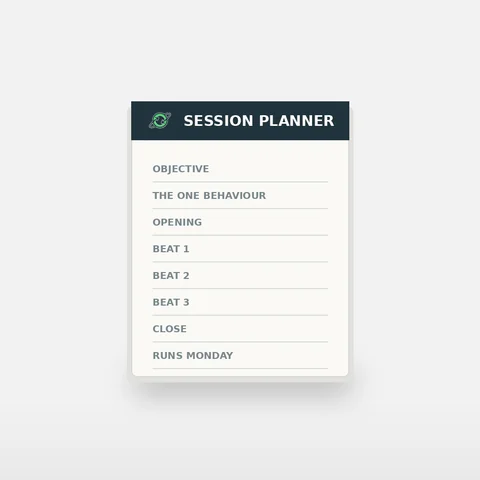

What client problem does this solve, and which tool fixes it?
The client problem. A solo HR lead or small HR team starts the year with a calendar full of templates and due dates. Leaders have not agreed on priorities, so every request feels urgent, and by spring the plan is abandoned.
How this article fixes it. It gives you a rhythm of quarterly and monthly sessions, with an agenda for each and a rule for what to do when a month slips.
The tools. The free Live Session Design Canvas and Run-of-Show ($0+) plans each session on one page, and the free session planner on this site fills in the one page plan. To have the first planning session facilitated, Book a free consult.

Why do HR calendars fill up and still not produce decisions?
A calendar of deadlines answers when. It does not answer who decides, what they need to know and what happens if they decide late. Because those questions are missing, the work waits for a conversation that no one has scheduled.
There is also a volume problem. A calendar with a template for every month feels thorough. In practice it spreads attention so thin that the three things that matter most get the same effort as the twelve that matter least.
What is the planning rhythm for the year?
Use four quarterly sessions with a theme each, and fill in the details with your own priorities:
- First quarter, set direction. Agree goals, roles and the hiring plan for the year
- Second quarter, check in. Review what people are telling you, how development is going and what is stuck
- Third quarter, retain and plan ahead. Look at engagement, succession and the workforce you will need
- Fourth quarter, review and reset. Close out the year, set the budget and decide pay and recognition
The themes are a starting point. Move them to fit your business, such as a retail season or a school year.
How do you run a quarterly planning session?
Hold it for 90 minutes with the leaders who make the decisions. Send a one page summary in advance, and use this order:
- 10 minutes: what happened last quarter, in three facts
- 20 minutes: what is coming, and which priorities compete for the same people
- 30 minutes: choose no more than three priorities for the quarter
- 20 minutes: for each one, name an owner, a first step and a date
- 10 minutes: say what you are explicitly not doing this quarter
The last item matters most. A plan that does not name what it drops has not made a choice. If you want a deeper agenda, read run a virtual annual planning session that decides.
What should each monthly working session produce?
Hold a 45 minute session per month on the topic that matters that month, with the people who will use the result. It must end with one output, not a discussion. Examples:
- A completed interview scorecard for a role you are about to open
- A development plan agreed with a manager for one person
- A one page summary of what the latest pulse survey says and the one thing you will do about it
- A budget request with the reasoning written down
Write the output at the top of the invitation. People come better prepared when they know what they will leave with.

How do you keep law and compliance dates in the plan?
Do not hard code dates from memory. Pull them from a source that is kept current, and add them to the calendar as fixed items before you plan anything flexible. For California employers, Urban Human Resources keeps a compliance calendar and a page on new California employment laws for 2027.
Check the source on the day you plan, since rules change. This article is education, not legal advice. Anything with a legal deadline belongs with your counsel or a qualified HR professional.
What do you do when a month slips?
It will. Decide the rule now, so you do not decide it under pressure:
- Swap, do not add. A new request replaces something of equal size, and you say what it replaces
- Keep the quarterly cap of three priorities, even when a leader asks for a fourth
- Hold a 15 minute check-in on the first week of each month to see what moved
- Tell leaders what slipped and why, in one sentence, as soon as you know
A plan that bends in public keeps the trust of the people who rely on it. A plan that silently shrinks does not.
Book the sessions before you book the deliverables
Put four planning sessions and twelve working sessions on the 2027 calendar this month. Name the output for each, and let the deadlines fill in around them. The calendar then shows decisions, not just due dates.
To have the first quarterly session facilitated and the rest set up for you to run, Book a free consult or book a course.
Keep going
More on learning and development strategy
Run a virtual annual planning session
An agenda that decides.
The meeting audit
Cut, shorten or go async.
How to facilitate group decisions online
Reach a call, not a pause.