
Insights / AI
When the AI has a voice in your session
A transcription bot listens. The newer pitch is an AI that speaks, joins the call as a participant and leads a group through a framework on a shared canvas. I have not run one in a live room, so this is not a review. It is the list of questions I would settle before any of them gets a seat in mine.
By McKinley Malbrough III, J.D., MS-HRM. Published October 31, 2026.
Short answer
An AI that speaks in your session is not a better notetaker. It is a second facilitator with no accountability for the room. Before it joins, decide four things in writing: who may overrule it, what it is allowed to say about a person, what happens to the audio, and who tells the participants. A framework is a sequence of questions. It does not tell you when the group is not ready for the next one.
Built for this situation
Take it with you
Online Facilitation Skills gear
Made to order. Returns terms are on the Refunds page.See all gear
What is an AI voice participant, and how is it different from a notetaker?
A notetaker is passive. It records, transcribes and summarises after the fact, and the group can forget it exists. An AI voice participant is active. It speaks in the call, asks the group questions and moves a shared canvas forward. Products in this category are marketed as walking a team through exercises such as a SWOT analysis, an objectives and key results session or a RACI matrix. That changes the facilitation problem. A notetaker affects what people are willing to say. A speaking participant also affects what the group does next, which makes it a decision-maker in the room whether or not anyone intended that.
Can a framework replace a facilitator?
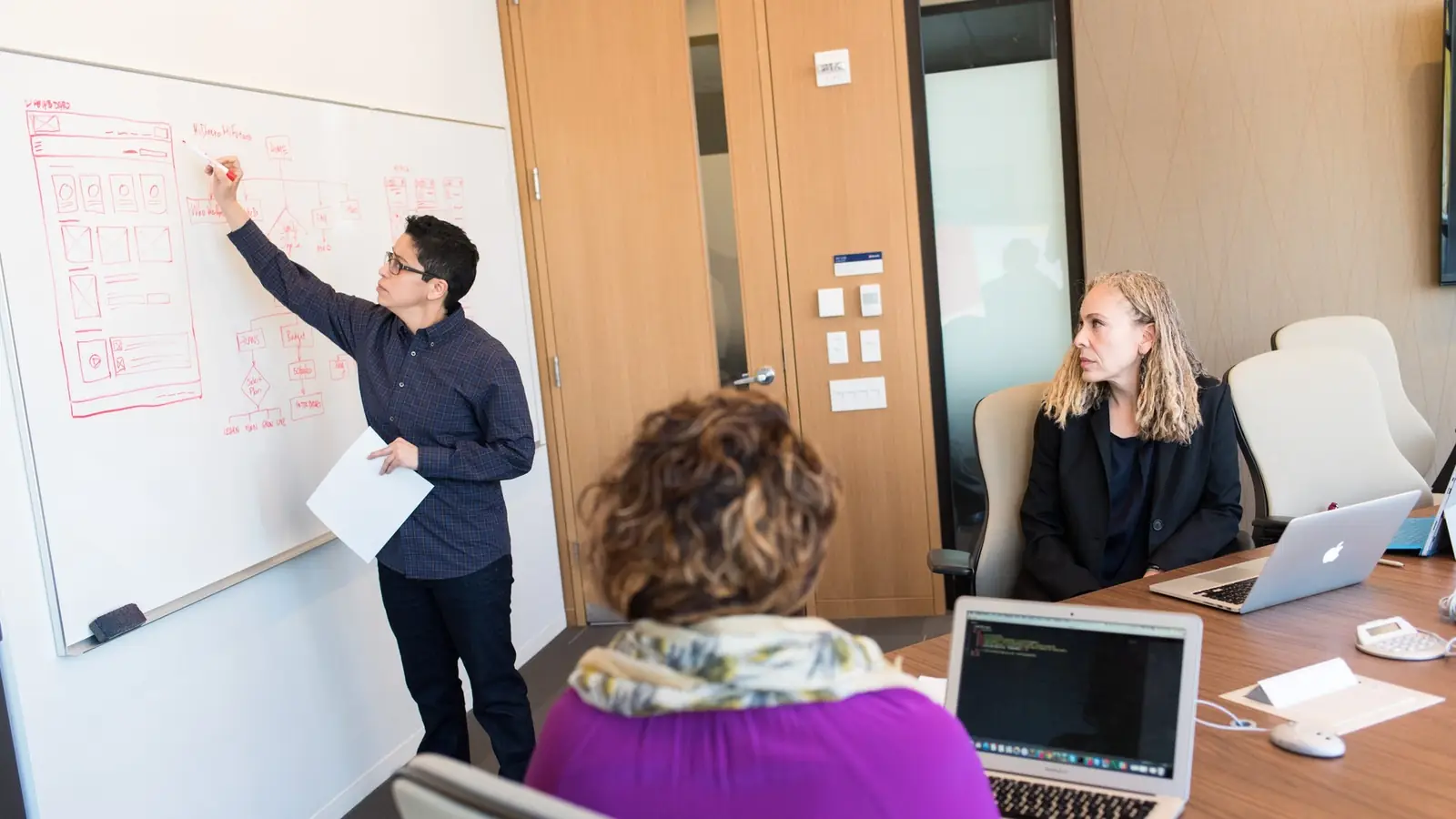
A framework is a sequence of prompts: strengths, then weaknesses, then opportunities. It works when the group is ready for each prompt in turn. A facilitator is the person who notices when it is not. Someone goes quiet after a colleague names a weakness that belongs to them. Two people are using the same word to mean different things. The group has moved to solutions while the problem is still being argued. Those moments are where a session is won or lost, and a script that advances on a timer or on silence will walk straight through them. Treat the framework as the plan and the facilitator as the judgment about when to leave the plan.
Who has the authority to overrule the AI?
Decide this before the call, not during it. If the AI proposes the next exercise and the room wants to stay on the current one, someone with a name has to be able to say stop, and the group has to know who that is. My rule for any co-facilitator, human or not, is that one person owns the room and the other works under that person. The tool gets the pen only for the segments I assign, and I can take it back without explanation. If a product cannot be paused, redirected or muted by the host in the moment, that is a reason not to use it with a live group.
What should it never say about a person?
Write the boundary down. A speaking AI will be tempted by the same material every analytics tool is: who talked most, who disagreed, who seemed hesitant. Saying that aloud, to the whole group, turns an observation into a public judgment. I would allow it to speak about the work product and the process, such as time remaining, the question on the table and what has been captured. I would not allow it to characterise any individual participant by name. If your platform also scores engagement, the California rules covered in AB 1883 and your engagement dashboard are the next thing to read.
What happens to the audio, and who tells the participants?
An AI participant that listens and speaks is processing voices. Ask the vendor where the audio goes, whether it is retained, whether it is used to train anything and who can see the transcript. Then tell the participants before the session starts, in plain words, and give them a real way to say no. California is an all-party consent state for recorded confidential communications, and the practical standard is the one in recording consent, in plain language. A line in the calendar invite is not the same as a conversation at the start of the call.
When would I use one?
Where the cost of a bad session is low and the structure is the point: a recurring planning ritual with a settled format, a team that already knows each other, a topic nobody will be hurt by. I would keep it out of sessions about performance, conflict, layoffs, harassment or anything where one careless sentence changes someone's standing. In those, the whole value of the facilitator is a person who can read a face and slow down. I would also run a rehearsal with colleagues first and ask them what it felt like to be spoken to by it.
Where I land
I am open to the idea. A well-built structure that keeps a recurring meeting from drifting is worth having, and some groups will prefer a patient tool to a person they have to impress. What I will not do is hand a tool a role and skip the authority question. In my sessions the answer to who is in charge never changes.
If you are building the rules for this in your own organisation, start with write the AI rule for training before you use it. The rule comes first and the tool second.
On what I have and have not checked
I have not tested any AI voice participant in a live session, and I could not verify the specific capabilities claimed for individual products, so none are named here. Treat every capability described above as a vendor claim to be demonstrated to you, not a fact about the category.
Keep going
Three bots are in your meeting and nobody asked
What a silent recorder does to the decision to speak.
Recording consent, in plain language
What to say before the recorder starts.
You do not own the room
Why the best facilitators hand it back.