
Insights / Delivery
Three bots are in your meeting and nobody asked
The conversation about AI notetakers has been about accuracy, storage and who owns the transcript. The question nobody is asking is the one that decides whether your session works: what does a permanent record do to the person who was almost going to say something.
By McKinley Malbrough III, J.D., MS-HRM. Published October 7, 2026.
Short answer
A July 2026 survey of 500 employed US adults found an AI notetaker present in the meetings of 33.4% of them. Among those, 25.1% were never asked for permission and a further 36.5% were asked only sometimes. The facilitation problem is not legal. A recorder changes what a half-formed thought costs to say out loud, and half-formed thoughts are the raw material of every useful session.
How common are AI notetakers in meetings now?
Common enough that the default has flipped. A survey of 500 employed US adults conducted on July 8, 2026 through the Pollfish platform, commissioned by a law firm and carrying a margin of error of about 4.4 percentage points, found that 33.4% said an AI notetaker or transcription bot was present in their work meetings. Another 22.4% could not say whether they had been recorded, which is its own finding. And 18.8% of all workers said they had discovered after the fact that a meeting or call had been recorded or transcribed without their knowledge, with 8% saying it had happened more than once. Worth naming the source's interest: the survey was commissioned by a firm that litigates privacy matters, which does not make the numbers wrong but does mean the questions were written by somebody with a view. Treat the magnitude as real and the framing as motivated, which is the right posture for most commissioned research.
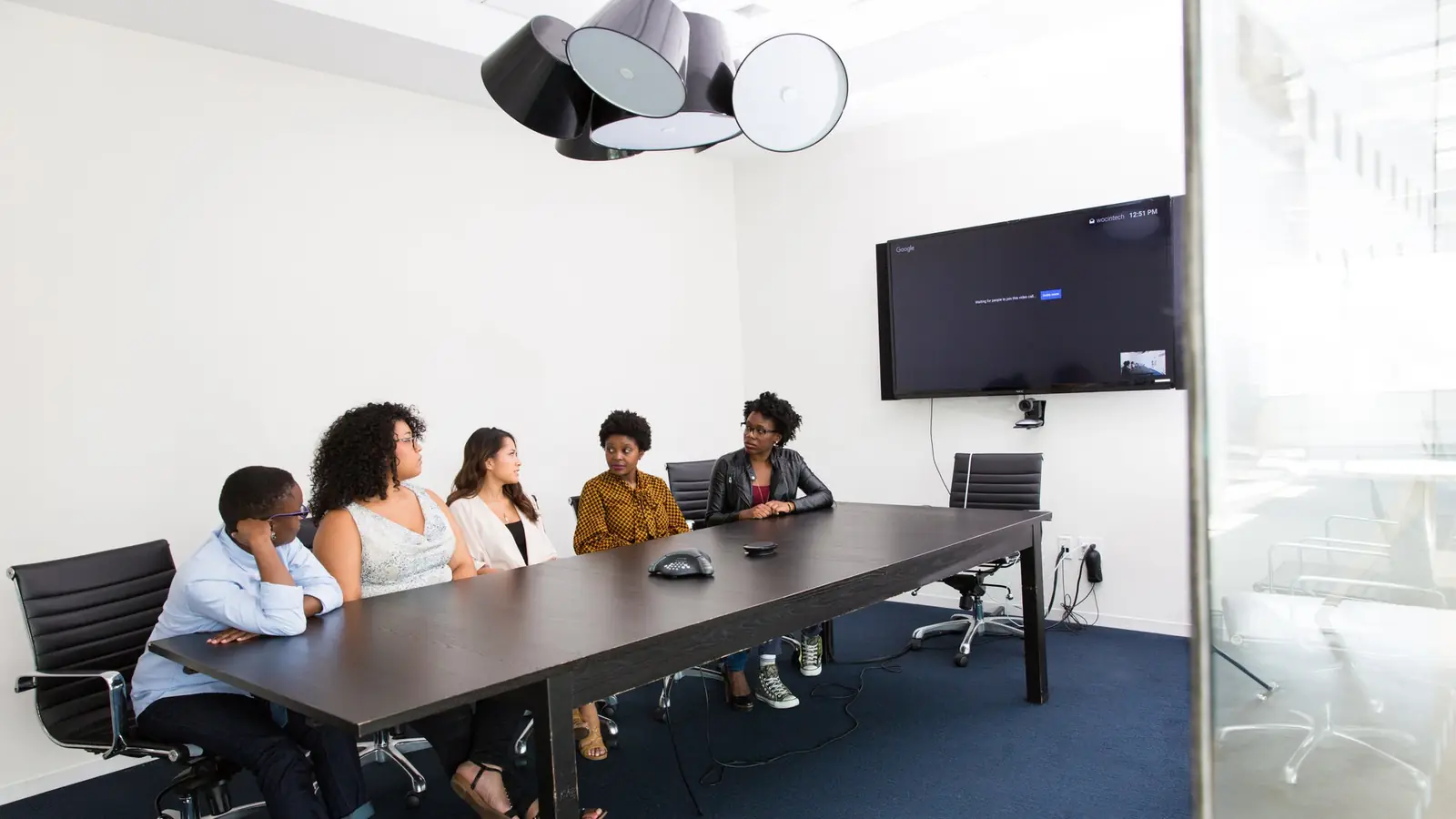
Were people asked first?
Mostly not, or not reliably. Among the workers whose meetings included a notetaker, 34.7% said they were always asked for permission first, 36.5% were asked only sometimes, 25.1% were never asked and simply saw the bot appear in the participant list, and 3.6% learned about it only afterwards. Taken together, 65.3% reported that consent was inconsistent or absent. The inconsistency is the part worth sitting with, because it is worse for a room than a clear policy in either direction. A participant who knows every session is recorded can adjust once and move on. A participant who does not know whether this session is recorded has to re-read the room every single time, and that re-reading happens in the same few seconds where they were deciding whether to say the thing they were not sure about.
What does a recorder do to participation?
It raises the price of being wrong out loud. Most of what makes a working session useful is people offering things they have not finished thinking: a half-objection, a hunch about why the rollout stalled, a question that might be stupid. Those contributions are cheap in a room with no memory and expensive in a room that produces a searchable artifact with your name attached. Nobody announces that they have stopped doing it. They just answer slightly more carefully, agree slightly more readily, and route the real conversation to a direct message afterwards, which is where facilitators find out what the session was actually about. This is the same mechanism I have written about with cameras. The visible behavior is compliance, the invisible behavior is withdrawal, and the metrics cannot tell the difference, which is why the dashboard usually says the session went well.
Does it matter that the bot is accurate?
Less than people assume, and arguing about accuracy is how this conversation gets derailed. A perfect transcript still changes the room, because the thing participants are responding to is permanence, not error. In fact accuracy cuts the wrong way here: the better the record, the higher the stakes of having said something careless in it. Where accuracy does matter is in the second-order harm. Tools in this category have been documented inventing action items from silence and attributing statements to the wrong speaker, and a wrong attribution in a permanent record is a problem nobody in the room can correct three weeks later when it surfaces in a performance conversation. So accuracy is worth caring about. It is just not the lever that governs whether people speak.
What should a facilitator actually do about it?
Decide, say so, and mean it. The failure mode is drift: a bot joins because somebody's calendar integration defaults to on, nobody mentions it, and the room quietly absorbs a change nobody chose. Four things fix most of it. First, decide before the session whether this one is recorded, and let the content drive that rather than the habit. A skills practice session should almost never be recorded. A policy walkthrough almost always can be. Second, say it in the first ninety seconds, in plain words, including who will see the output and how long it is kept, because a vague assurance is worse than none. Third, if a participant objects, honour it without negotiating in front of everybody, which means having a fallback ready rather than improvising. Fourth, name the parts that are off the record and then protect them, because a facilitator who says a segment is unrecorded and then summarises it in the follow-up email has burned something they will not get back.

What about the law?
Short version, and it is not the interesting part of this piece. Recording rules vary by state, several states including California require all parties to consent, and the survey found that 41.8% of workers had no idea recording laws applied to work meetings at all while 11.6% believed one person's consent was enough everywhere. If you run sessions across state lines, the practical answer is to default to asking everybody, because that covers the strictest rule in the set and costs you one sentence. For California specifically, there is a separate and newer question about what the tool does with the recording once it has it, since from January 1, 2027 an AI tool that infers an employee's emotional state sits inside a different prohibition entirely. I have written that one up separately. This article is about the room, not the statute, and the room is where you will feel the effect long before a regulator does.
Is there a version of this that helps?
Yes, and it is worth saying because the honest position here is not that recorders are bad. A transcript genuinely helps the person who was in back-to-back sessions, the person whose first language is not the one the meeting ran in, the person who processes better by reading, and the person who was not there. Those are real gains and they fall disproportionately on people who are already working harder to keep up. The thing that makes them gains rather than costs is that the room chose. A recorder people agreed to is a shared tool. A recorder that appeared is surveillance with a helpful interface, and participants are perfectly capable of telling the difference even when they say nothing about it. If you want the benefits, the price is one explicit decision, announced out loud, every time.
Why I care about this one
I run sessions where the whole point is that somebody attempts something badly in front of other people. That is not a nice-to-have in facilitation training, it is the entire mechanism, and it only works if the attempt is cheap. A participant who fumbles a difficult-conversation role-play learns more in those ninety seconds than in the preceding hour of content. Put a permanent record on that attempt and most people will quietly choose the safer version, perform competence they already have, and leave with nothing.
So I have a rule and I will say it plainly: practice segments are not recorded, and I tell the room that before we start rather than after somebody asks. It costs me a cleaner follow-up document. It buys the thing the session exists for. The broader principle generalises past my format, and it is the one line worth carrying out of this piece. Decide what the session is for, then decide whether a record serves that or competes with it, and never let a calendar integration make that call on your behalf. The adjacent argument about reading rooms badly is in camera off is not disengagement.
On the numbers in this piece
The survey cited throughout was commissioned by a law firm, fielded to 500 employed US adults on July 8, 2026, with a margin of error of roughly 4.4 percentage points for the full sample and about 7.6 points for the subgroup whose meetings included a notetaker. A subgroup of 167 people is a small base, so treat the consent breakdown as directional rather than precise.
I am citing it because it is the clearest recent measurement of a thing most people only have anecdotes about, not because a single commissioned poll settles anything. If you have internal data on how many of your own sessions carry a bot, that number is better than this one for your purposes.
Keep going
AB 1883 and your engagement dashboard
What the new California law does and does not reach inside your meeting platform.
Recording consent, in plain language
What you have to say before the recorder starts, and what you have to mean by it.
Camera off is not disengagement
The same mistake, without a statute attached to it.