
Field notes / Practice
Every meeting has three jobs, and most meetings give all three to one person
The facilitator, the note taker and the timekeeper are three different jobs. I split them before each session I run, and I think you should too.
By McKinley Malbrough III, J.D., MS-HRM. Published October 26, 2026.
Short answer
A meeting has three jobs: the facilitator guides the conversation, the note taker records decisions and the timekeeper watches the clock. When one person holds all three, each job suffers. I split them before every session, name the three people in the first minute and let the facilitator run the room without a pen or a watch.
Built for this situation
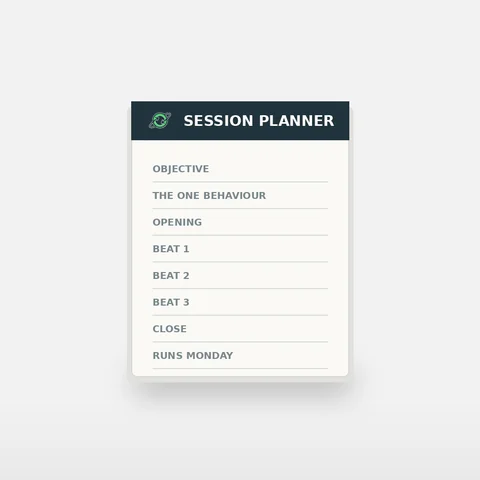
Take it with you
Online Facilitation Skills gear
Made to order. Returns terms are on the Refunds page.See all gear

What is my claim about meeting roles?
My claim is simple: every meeting has three jobs, and a meeting runs better when three different people hold them. The jobs are the facilitator, the note taker and the timekeeper. Most meetings hand all three to whoever called the meeting, and that person quietly does each job worse.
I run live online sessions for a living, and this is the first thing I settle before a session starts. I do it in small meetings and large ones, in training and in staff meetings. It costs about a minute, and it is the cheapest improvement to a meeting that I know.
Below I define each job, show what goes wrong when one person holds two of them and give the one-minute way to assign them. If you want the definition of facilitation itself, what is meeting facilitation covers it. This piece is about who does what.
What does the facilitator do?
The facilitator guides the conversation. That means stating the purpose, asking the questions, inviting the quiet people, steering back from tangents and checking whether the group has reached a decision or only a pause.
This job needs eyes and ears. The facilitator watches faces, listens for what is being avoided and decides in the moment whether to push or to wait. A person who is looking at a notepad or a clock cannot do that. Attention is the facilitator’s only tool, and the other two jobs spend it.
The facilitator also stays neutral about content as far as the situation allows. If you are the one with the most at stake, you will find that hard, which is one reason I often suggest someone else take the chair. Nobody is coming to facilitate your meetings makes the wider case that the skill has to live inside the team.
What does the note taker do?
The note taker records what was decided, who owns each action and by when. Not what was said. The record is the product of the meeting, and it needs its own person.
A good note taker interrupts, politely, to confirm a decision: “I have this as Dana owns the draft by Friday. Is that right?” That one sentence prevents most of the confusion that shows up in the next meeting. It also gives the facilitator a natural way to close a topic.
This is where people ask about AI tools. A recording tool can capture a transcript, but a transcript is not a record of decisions, and it brings its own questions about trust and consent. I wrote about that in AI notetakers and participation. My view is that a person still needs to own the decisions and actions, even when a tool helps with the words.
What does the timekeeper do?
The timekeeper watches the clock against the agenda and speaks up early. Early matters. A warning at the halfway point of a topic gives the group a chance to adjust. A warning at the end only announces that it is over.
The timekeeper also protects the end of the meeting. When time runs short, the usual casualty is the last agenda item and the action review, which are the two parts that turn talk into work. A person whose only job is the clock will protect them.
This job is the easiest to hand off and the one people skip most often. It carries a social risk, since the timekeeper interrupts senior people, so the facilitator should give the timekeeper explicit permission at the start.
What goes wrong when one person holds two of the jobs?
Each pairing fails in a predictable way.
- Facilitator and note taker. The person typing stops watching the room. Quiet people stay quiet, tension goes unnoticed and the notes get long because the writer is afraid of missing something.
- Facilitator and timekeeper. The person managing the clock rushes the conversation that most needs room, or lets it run because a good discussion feels too valuable to stop.
- Note taker and timekeeper. The record loses the last items because the clock wins, and nobody is free to confirm a decision before the group moves on.
Hold all three and the problems stack. In a virtual room they get worse. The facilitator is also watching the chat, the participant list and the screen share. Facilitation techniques for live online sessions goes through that load. A person facilitating an online meeting while taking notes and watching the time is doing three jobs through a screen.
The common reply is that the meeting is too small to need roles. A four-person meeting needs the roles less formally, but it still needs them. Four people can cover three jobs with one person doubling up, but I would double the note taker and timekeeper before I would double either with the facilitator.

What if the facilitator also needs to take part?
Then someone else should facilitate, or the facilitator should say openly that they are switching hats. A leader who wants to give an opinion on a topic can hand the chair to the facilitator for that topic, speak and take the chair back.
I tell clients that a person who is both the decision maker and the facilitator is carrying a conflict. The group senses it. People hold back when the leader is also the referee. Passing the facilitator role to someone else, even a team member who has not done it before, often changes the quality of the discussion more than any technique.
A new facilitator does not need to be perfect. They need a purpose for the meeting, a few good questions and permission to say “let me summarize.” How to facilitate an all-hands meeting shows the same approach at a larger scale.
How do you assign the three jobs in a minute?
Do it at the start, out loud, in this order. Name the facilitator, the note taker and the timekeeper. Say what each will do in one sentence. Ask for any objection. Then begin.
Example script. “Before we start, three roles. Sam will facilitate, which means guiding the conversation and calling on people. Priya will take notes, which means recording decisions and owners, and she may stop us to confirm. Luis will watch the clock and give us a signal at the halfway point. Any questions on that?”
In an online meeting, put the three names in the chat so people can see them. Ask the note taker to type decisions into a shared document that everyone can watch. If you use breakout rooms, give each room its own note taker and timekeeper. How to run a breakout room shows how to set that up.
Rotate the roles across meetings. People learn what each job needs by doing it, and the person who took notes last week will be kinder to the facilitator this week.
So here is my position, stated plainly: if you run a recurring meeting, assign the three jobs next time before you do anything else, and keep the facilitator free of a pen and a clock. You will hear the difference in the first ten minutes.
Related reading: The first five minutes of a virtual meeting decide the next fifty.
Keep going
What is meeting facilitation
The definition and the core moves.
AI notetakers and participation
Trust, consent and the human record.
How to run a breakout room
Roles inside small groups.
Nobody is coming to facilitate your meetings
Why the skill has to live in the team.
Want a second read on your meeting?
Bring one recurring meeting to a free consult. In twenty minutes we decide who holds each of the three jobs.