
Field notes / Practice
A year-end virtual retrospective that does not turn into a blame session
Most year-end retros become venting or a trial. The fix is not a nicer tone. It is three structural moves that change what the room is allowed to do.
By McKinley Malbrough III, J.D., MS-HRM. Published November 4, 2026.
Short answer
Start with data so the room argues about facts and not people. Separate keep, stop, and start into three distinct rounds so complaints do not swallow the rest. Close with one commitment per person, each with a name and a date. In my opinion those three moves do more than any amount of “let's keep this positive.”
Built for this situation
Take it with you
Online Facilitation Skills gear
Made to order. Returns terms are on the Refunds page.See all gear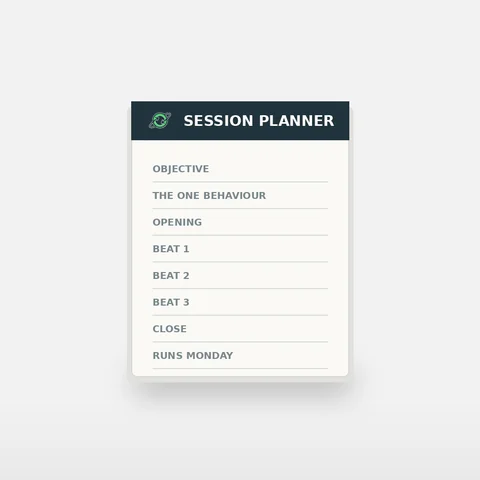
Why do year-end retros turn into venting or blame?
Because a year is a long time and a retro has an open door. Someone says the launch went badly, someone else says it was the handoff, and within ten minutes the room is deciding whose fault the handoff was. Tone is not the cause. Structure is. A retro with no rules about what to look at and in what order will always drift toward the most emotional material, and the most emotional material is usually about people.
I have seen well-meaning facilitators answer with ground rules about kindness. It helps for about a quarter of an hour. What lasts is changing the shape of the conversation, which is what the three moves below do. I also wrote about the follow-through problem in the retrospective nobody acts on, which is the other half of this one.


Move one: why start with data?
Open with what happened, not how people felt about it. Before the session, collect the facts that matter: dates, outputs, what shipped, what slipped, the decisions made. Put them on a shared board in the order they occurred and have people read them silently for a few minutes.
This does two jobs. It gives everyone the same picture, so the argument is about the record and not about whose memory is better. And it moves the room's attention to events and systems, where blame has less to grip. “The handoff happened on the 14th and the approval was missing” invites a different conversation than “Sam dropped the ball.”
Use only data you can point to. If a fact is disputed, mark it as disputed and keep going. A retro is not the place to settle it. I would rather have one agreed timeline than ten private versions of the year.
Move two: why separate keep, stop, and start?
Because each question wants a different kind of thinking, and mixing them lets the loudest feeling set the agenda. Run them as three rounds, in this order, each with its own silent writing time and its own clock:
- Keep: what worked and should survive the new year. Start here, because naming strengths first gives people something to stand on
- Stop: what cost more than it returned. Write about practices and systems, not people, and read each one aloud before voting on which matter most
- Start: what is missing. Limit each person to a small number of ideas so the list stays usable
Silent writing before each round is the most important piece. It protects the quiet person and cuts the pile-on. If you want ideas for the format, workshop facilitation activities has several, and celebrate small wins out loud is a good way to open the keep round.
Move three: why close with one owned commitment each?
Because a retro that ends with a list of problems has taught the team to talk, not to change. End by asking each person to state one commitment, in a sentence, with a name and a date: “I will write the handoff checklist by December 15.” Capture it live.
One commitment each is deliberate. It keeps the list small enough to remember, and it spreads ownership so the facilitator or the team lead is not carrying it alone. Commitments belong to people, not to the group. “We should communicate better” is a wish, and the room should hear the difference.
Put the first check-in on the calendar before anyone leaves. If you do only one thing from this note, do that.


What should you do when someone starts blaming anyway?
Redirect to the system and keep your voice level. A few lines I use:
- “Let's look at what the process allowed. What would have caught this earlier?”
- “I want to hold that one and come back to it after we write down what we saw.”
- “Say it as what you needed, not what they failed to do.”
If a real conduct issue surfaces, take it out of the retro and into a private conversation, and say so openly. Not every grievance belongs in a group review, and some belong with HR. The person who takes over the room covers the facilitation side.
End the year on a decision
A good retro is not the one that feels best. It is the one where the team leaves knowing what it will keep, what it will drop, and who is doing what first. Data, three clean rounds, and a commitment each get you there with less drama than any speech about tone.
If you want to practice running this format before your own year-end session, Book a course on the events page and bring the retro you are dreading.
Keep going
The retrospective nobody acts on
What happens after the board is full.
Run a virtual annual planning session
A 3-hour agenda that ends with owners and dates.
Book a course
Live sessions with dates, seats, and prices published.