
Insights / Delivery
What do you do when a live online session goes wrong?
Hard moments in a live session are predictable, even when the details are not. Here is a three-move framework and a short menu for the moments I see most.
By McKinley Malbrough III, J.D., MS-HRM. Published October 29, 2026. Last reviewed October 29, 2026.
Short answer
Use three moves for a hard moment: pause for two seconds, name what is happening in neutral words, then choose from a prepared menu. Prepare responses for hostility, heavy disclosures, technology failures and drift, bring a co-host, and keep a one-page plan so you can act when your attention is split.
Built for this situation
Take it with you
Online Facilitation Skills gear
Made to order. Returns terms are on the Refunds page.See all gear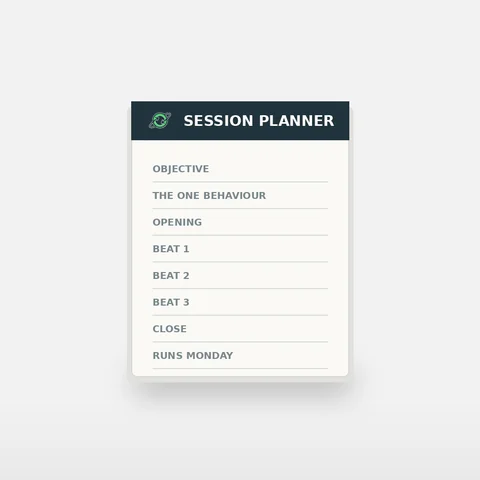

Who this is for: Facilitators, trainers and managers who run live online sessions and want a plan for the moments that unsettle a room.
What is a simple framework for a hard moment in a live session?
Use three moves in order: pause, name, choose. Stop the flow for a breath, say plainly what is happening, then pick one of a few prepared responses. The order matters because a facilitator who skips the pause and the name usually reacts instead of choosing.
- Pause. Take two seconds of silence before you speak. It lowers your pulse and tells the room you are thinking, not flustered.
- Name. Say what you see in neutral words: “I notice the energy just changed,” or “we have lost the audio for a few people.” Naming turns a private problem into a shared one.
- Choose. Pick from a short menu: continue, adjust, take a break, move it to a private channel or end the topic. Prepare the menu before the session.
Most hard moments feel worse in a virtual room because you cannot read the whole group at once. The framework gives you a script when your attention is split between the speaker, the chat and the screen. For the wider skills behind it, facilitation techniques for live online sessions goes through the basics.
What do you do when someone is hostile or dismissive?
Acknowledge the point under the tone, set the boundary on the tone and move the group forward. A participant who says “this is a waste of time” is often telling you the session has missed their need.
Try something like: “Thank you, that tells me the example is not landing for you. Let me hear what would make this useful, then we will go back to the task.” Keep your voice level. If the behavior continues, offer a private chat during the next break. Do not debate in front of the group, because the room will remember the argument and not the content.
If one person keeps taking the floor, a different move applies, and how to handle the person who takes over the room covers it. If the sponsor is the one causing the problem, see what to do when the executive sponsor skips your training for related cases.


What do you do when someone shares something heavy?
Slow down, thank the person and give the group a choice about how to continue. Do not rush to fix it, and do not move on as if nothing happened. A participant who discloses a loss, a health issue or a bad experience at work has trusted the room, and the next ten seconds set the tone for everyone.
A sentence that works: “Thank you for telling us. We can take a minute, or we can keep going, and you can step out any time.” Offer a break if the room needs it. Follow up privately after the session. If what they shared is a complaint about workplace conduct or safety, follow your organization’s process for reporting it, and do not promise confidentiality you cannot keep. This page is education, not legal advice.
Sessions held after hard news need extra care. How to facilitate a session after layoffs shows how to open when the mood is already heavy.
What do you do when the technology fails?
Name it fast, give people one clear instruction and keep a backup ready. Silence about a technical problem costs more trust than the problem itself.
Prepare three things before each session: a co-host who can handle the platform, a phone number or chat channel people can use if they drop, and a short plan for each common failure. If your slides will not share, describe the content and use the chat. If audio drops, switch to a backup link already sent in the invitation. If half the group leaves, pause and wait two minutes before you decide what to do. Time zones and device differences add risk, which I discuss in whose morning is it.
What do you do when the session is going off track?
Say what you see, check the group’s priority and make a visible choice. A session goes off track when a good question pulls the group away from the plan, or when a few people start a side debate the rest cannot follow.
Use a parking lot for ideas worth keeping and say when you will return to them. Write them in a shared document so people can see them captured. If the detour is more valuable than the plan, say so and drop an agenda item on purpose. The mistake is drifting without deciding. What to do when nobody talks in a training session covers the opposite problem, when the room goes quiet.
How do you prepare for hard moments before they happen?
Write a one-page plan with your menu for each moment, a signal for your co-host and a line you can say when your mind goes blank. Preparation turns a surprise into a known situation.
Here is a hypothetical example of the page. It is an illustration, not a policy.
Hypothetical hard-moment plan. Hostile comment: acknowledge, ask what would help, move on. Heavy disclosure: thank, offer a break, follow up privately. Tech failure: name it, switch to the backup link, co-host takes the chat. Off track: park it, decide, return. Line for a blank mind: “Let me take that one question at a time.”
After each session, spend five minutes noting which moment showed up and what worked. Over a few sessions you will build your own menu, which is better than any list. For a deeper look at why managers freeze in these moments, read the manager who freezes.
Hard moments FAQ
What if I cannot think of anything to say?
Use the pause and say a neutral sentence such as “let me take that one piece at a time.” It gives you a few seconds and signals control.
Should I confront a disruptive participant in front of the group?
Start with a brief, neutral boundary in the session and move to a private message or call afterward. Public debate usually costs the group more than it fixes.
Do I need a co-host?
A co-host is a strong safeguard for a group of any size. One person can manage the platform and the chat while you facilitate.
Do this week
Write your own one-page plan for the next live session: one line for each of the four moments above and a signal for your co-host. For a second read, book a free consult or use the contact page.
Where these numbers come from
| IAF Core Competencies | International Association of Facilitators. Competencies include managing group conflict and providing a safe environment for conflict to surface. |
All sources accessed October 29, 2026.
McKinley Malbrough provides education and is not an attorney. Contacting him creates no attorney-client relationship. If you have a legal question or need legal advice, contact an employment attorney.
Keep going
How to handle the person who takes over the room
When one voice dominates.
How to facilitate a session after layoffs
Opening when the mood is heavy.
The manager who freezes
Why compliance training misses it.
What to do when nobody talks
The opposite problem.