
Insights / California
How to run a supervisor briefing before January 1, 2027
When a law changes, employees ask their supervisor first. A supervisor who has heard the change once, in plain words, and practiced one sentence to say about it is far better placed than one who read a memo. This is how I would run that briefing live.
By McKinley Malbrough III, J.D., MS-HRM. Published November 4, 2026.
Short answer
Run one live 60 minute briefing: show which of the changes reach your headcount, give each supervisor five rules with a sentence to say, practice with fictional scenarios, and keep a sign-in record. This article is a facilitation plan, not legal advice. Have a licensed California attorney review anything that turns on a legal exception. The $39 kit I built holds the forms, handout, and calendar behind it.
Built for this situation
Take it with you
Online Facilitation Skills gear
Made to order. Returns terms are on the Refunds page.See all gear

Why brief supervisors before the date, and why live?
Employees take questions about pay, leave, tools, and policy to the person they report to, not to the handbook. If the supervisor has not heard about a change, they guess, and a guess from a supervisor sounds like company policy. A short briefing before the date gets one accurate sentence into each supervisor's head.
Live matters because supervisors will have questions you cannot predict, and the answer to one person's question is useful to the other nine. A memo cannot hear a question. A live session also lets you say what a supervisor should do when they do not know: say so, and take it to HR the same day.
A caveat on scope. A supervisor briefing is not the same as the harassment prevention training that California requires of supervisors at many employers. That is a separate duty with its own rules, covered in California harassment prevention training requirements and the live training mandates guide.

What should the briefing cover?
Cover less than you think. A supervisor can hold a handful of changes, not a statute book. Sort the changes by what they ask of a supervisor:
- Pay: any change to rates, the exempt salary floor, or how time is recorded and paid
- Leave and time off: new or changed leave and what to do when an employee asks
- Contracts and policies: language the company is changing, and what supervisors must stop saying
- Tools and monitoring: any software that tracks, scores, or screens employees. California's AB 1883 takes effect January 1, 2027, and restricts certain AI workplace surveillance, as AB 1883 and your engagement dashboard explains
Which laws reach you depends on how many people you employ, so start by sorting. A law that applies only above a certain headcount should not take ten minutes of a small employer's briefing. If you are unsure what applies, that question is for your attorney or HR advisor before the briefing, not during it.
What does a 60 minute agenda look like?
Here is a timed plan for a group of up to twelve supervisors:
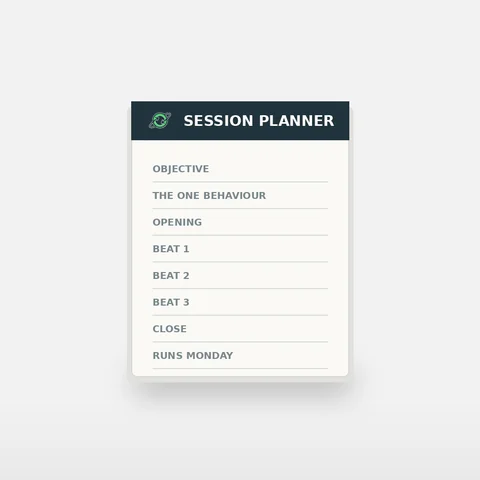
- 0:00 to 0:05 Open. Say why you are meeting, what supervisors will leave with, and that questions you cannot answer today will be answered in writing within a set number of days
- 0:05 to 0:20 The changes. Walk through the short list that reaches your company, one slide or one page per change, in plain words
- 0:20 to 0:30 Five rules. Give each supervisor five rules, each with one sentence to say and one thing never to say
- 0:30 to 0:50 Practice. In groups of three, supervisors work through fictional scenarios, taking turns as supervisor, employee, and observer
- 0:50 to 0:57 Questions. Write every question you cannot answer on a shared page and assign an owner
- 0:57 to 1:00 Close. Everyone confirms attendance and the date by which written answers will come
Keep the time honest and put the agenda on the first slide, the way a timed agenda does. The practice block is the part supervisors remember, so protect it from the walk-through.
How do you make the five rules usable?
A rule a supervisor cannot say out loud is not a rule they will follow. For each of the five, write three lines:
- The rule in one sentence
- What to say when an employee asks about it
- What never to say, such as a guess about a law or a promise about pay
Example in the shape only: the rule is that every question about pay or leave goes to HR the same day. What to say is “I want to get you the right answer, so I will ask HR today and come back to you by Friday.” What never to say is “I think the law says…” Then have supervisors say the line aloud once. Saying a sentence aloud in a safe room is the only practice that survives a real hallway.
If a supervisor tends to freeze or over-explain in these moments, the manager who freezes is worth sharing with them.
How do you run the scenario practice?
Use short, fictional scenarios, three or four lines each, that describe an employee asking a question or raising a concern. Do not use real employees or real incidents. Each triad reads a card, the supervisor responds in character, the employee reacts honestly, and the observer notes one thing that worked and one thing to try.
- Give each round 5 minutes, including a quick debrief
- Rotate roles so every supervisor plays each part once
- Ask the whole group, at the end, for the lines that worked, and put them on the shared page
Practice online works well in small breakout rooms. For the mechanics, see how to run a breakout room.

What should you keep on file afterward?
Keep a simple record of the briefing: the date, who attended, who ran it, and what was covered. A sign-in sheet or a platform attendance export is enough for a briefing like this. Keep the shared list of questions and the written answers, with dates.
Training records have their own rules for formal required training, and those are not the same as a briefing. See training records in California: what to keep. If a briefing runs during working hours for hourly employees, check is employee training time paid in California before you schedule it.
What is in the readiness kit, and what is it not?
I built the California 2027 Employer Readiness Kit ($39) so an employer or HR lead is not building the briefing and the forms from nothing. As described on the product page, it includes:
- 14 laws sorted by what they cover, who they reach, and when they start, with a matrix for employers of 5, 25, and 100 employees
- 11 forms in a 34-page PDF, including pay checks, a stay-or-pay contract rewrite, bereavement leave, an automated decision system review, a surveillance check, and supervisor briefing and notice templates
- A 4-page supervisor handout with a facilitator agenda, five rules with what to say, fictional scenario cards, and a sign-in sheet
- An Excel planner with 12 sheets, including a law sorter, pay and exempt-floor tests, a contract test, inventories, and an action calendar
- 8 copy-and-paste policy and email texts
- An action calendar of 25 dated tasks from November 2026 to January 2028, each marked as a legal date or a suggested date
Every legal point in the kit carries its official source and the date it was checked, November 4, 2026. Laws change, so check again before you rely on any of it. It is not legal advice and not a substitute for an attorney. It is a set of forms, checklists, and template language to adapt, it does not cover every industry, local ordinance, or union contract, and it does not include investigations or legal work. Have a licensed California attorney review any contract that relies on a statutory exception.
Make the change something a supervisor can say
A law change reaches your employees through the people they report to. One live hour, five rules, a few practiced sentences, and a record of who heard it will do more for your supervisors than a long email. Plan it, run it before the date, and give people somewhere to send the questions you cannot answer yet.
If you want to build the facilitation skill that makes a briefing like this work, with practice and feedback, the next step is the events page. Book a course and choose the session that fits.
Keep going
California live training mandates
Which live training the state requires, and from whom.
AB 1883 and your engagement dashboard
What the new law does and does not reach.
Book a course
Live sessions with dates, seats, and prices published.