
Field notes / Practice
The Chat Box Is Not a Participation Strategy
A scrolling chat looks like a room full of thinking. Often it is a few fast typists and a lot of people reading.
By McKinley Malbrough III, J.D., MS-HRM. Published October 22, 2026.
Short answer
Facilitators say put it in the chat and call the room engaged. But the chat records who is willing to type quickly in public, not who is learning. It hides people who are translating, reading slowly or thinking before they commit. A sequence of silent write, pair share and one voice reaches more of the room.
Built for this situation
Take it with you
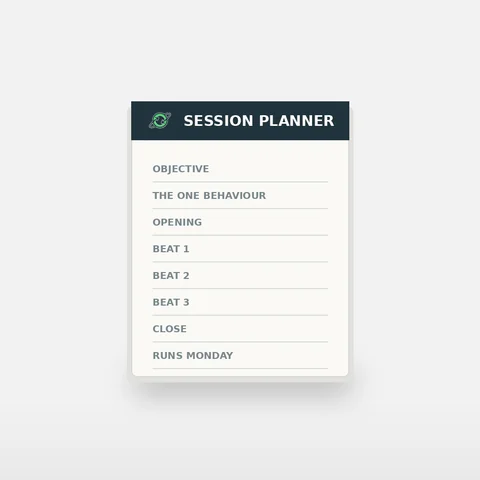
Online Facilitation Skills gear
Made to order. Returns terms are on the Refunds page.See all gear
The habit
You ask a question and nobody unmutes. So you say the line every virtual facilitator says: “Put your answer in the chat.” Messages appear. The screen fills. You read a few aloud, thank the typists and move on, and the session feels alive.
I think this is the most common substitution in virtual facilitation, and it is easy to see why it spreads. The chat is visible, it produces something to point at, and it solves the hardest moment in the session, which is the silence after a question. It also quietly redefines the goal. We stop asking whether people are thinking and start asking whether people are typing.
What the chat actually measures
The chat records three things: who reads the question fast, who types fast, and who is comfortable having a sentence appear in public under their name. That is a real skill set, and it is not the same as learning or understanding.
Count the messages and you have a measure of activity from the people most at ease. Count the messages and divide by the headcount and you have a number that feels like participation and describes almost nothing about the people who typed nothing. A silent participant could be lost, or bored, or the one person in the room who understood the idea and is checking whether the example fits their job.
A room I would have called engaged
Here is a hypothetical. A facilitator runs a session for 24 people and asks for one example of feedback that worked. Within two minutes, the chat holds nine messages from six people. The facilitator reads four aloud and says the group is clearly engaged.
Look at what is missing. Eighteen people produced nothing visible. Some were still reading the question. Some were writing a longer answer and watched the conversation move past it. Some were working in their second language and chose to translate before they typed. Some did not want their name beside an answer a colleague might judge. The facilitator saw six people and described twenty-four.
Who the chat leaves out
The chat favors a narrow profile, and the people it leaves out are not the least capable. They are processing a different way:
- People translating, who need time to move an idea from one language into another before it is worth posting
- Slow readers and people using assistive tools, for whom a fast-moving chat is hard to follow at all
- People who think before they speak and decide an answer is not ready by the time the thread has moved on
- People wary of visibility, who will not put a draft thought under their name in front of colleagues and a facilitator
Several of these overlap with the groups discussed in neurodivergent participants are not a special case, and the mistake has the same shape as reading cameras. Camera off is not disengagement, and a quiet chat is not disengagement either. In both cases we treat one visible signal as the whole room.
Why it feels like data
A chat can be counted, scrolled and exported, and that makes it feel like evidence. I understand the pull. A facilitator needs some way to know whether the room is with them, and a message count is available while a thought in someone’s head is not.
There is a speed problem as well. A busy chat moves faster than a facilitator can read it while also teaching. What gets read aloud is usually the first message, the longest one or the one from someone who is already known. The facilitator is sampling the loudest corner and treating the sample as a map.
Silent write, pair share, one voice
Here is the sequence I use in place of “put it in the chat.” It takes about eight minutes and works with any question worth asking:
- Silent write, two minutes. Everyone writes an answer in a shared document or on paper. Nobody types into a public thread. This gives the slow reader and the translator the time they need, and it means every person produces a thought
- Pair share, three minutes. Send people to breakout rooms in twos. Each reads what they wrote and the pair picks one idea to bring back. Saying a sentence to one person is a much smaller risk than saying it to twenty-four
- One voice, three minutes. Each pair offers a single sentence, spoken or typed, and the facilitator does not call on individuals. The sentence belongs to the pair, so nobody is exposed alone
By the end, every person has thought and has said something to another human. The room also holds a record of thinking from people who would not have typed. The same move works as an opener, with a written first question, as in how to open a virtual session.

Where the chat still earns its place
I am not arguing that the chat should be turned off. It is a good back channel for questions, links and resources, for quick polls where the stakes are low, and for people who prefer to type once they have had time to think. The mistake is using it as the only route and calling the result participation.
If the room is silent for a deeper reason, the sequence will not fix it by itself. Safety silence, clarity silence and fatigue silence each need different moves, and what to do when nobody talks separates them. The chat box is one tool. It is not a diagnosis.
What this costs
The sequence uses eight minutes you might have spent on content. It needs breakout rooms to work, and some groups resist pairs for the first minute. For a webinar of hundreds, pairs are not realistic. In that setting a structured poll with a written prompt is the best you can do, and I would simply stop calling it engagement.
It also asks you to tolerate two minutes of visible silence while people write. That silence is the point, and it is uncomfortable for the facilitator long before it is uncomfortable for anyone else. Offer a choice at every step: write or speak, type or talk, share a sentence or pass. A choice that people can see is part of what makes the sequence safe.
What I would try first
In your next session, find the first “put it in the chat” in your plan and replace it with the three steps. Then watch the one voice round and notice who speaks that never typed in the chat before. Those are the people your message count was not counting.
Related reading: Quiet participants need a different door.
Related reading: What to do instead of icebreakers in virtual meetings: five openers with scripts.
Keep going
What to do when nobody talks
Safety, clarity and fatigue silence need different moves.
How to open a virtual session
The first three minutes, with a written first question.
Camera off is not disengagement
Why one visible signal is not the whole room.
Neurodivergent participants are not a special case
Design for the range, not the average.
Want a second read on a session plan?
Bring one session plan. In a free consult we find every “put it in the chat” and replace it with a sequence that reaches the whole room.