
Insights / AI in training and meetings
How do you keep AI from eroding the skills your people need, and what should the session do?
Output goes up and the work gets faster. Then a hard case arrives that the tool cannot handle, and the person who used to handle it has not done it by hand in a year. Speed was real. So was the cost.
By McKinley Malbrough III, J.D., MS-HRM. Published November 13, 2026.

Short answer
AI can lift results during practice and lower what people can do without it. One study of about 1,000 high school math students found that open AI access improved practice scores by 48 percent and lowered exam scores by 17 percent. The fix is practice-first design: keep core skills by hand, use AI to assist after a person has tried, and hand off only the chores. A live session is where that practice and feedback happen.
Built for this situation
Take it with you
Online Facilitation Skills gear
Made to order. Returns terms are on the Refunds page.See all gear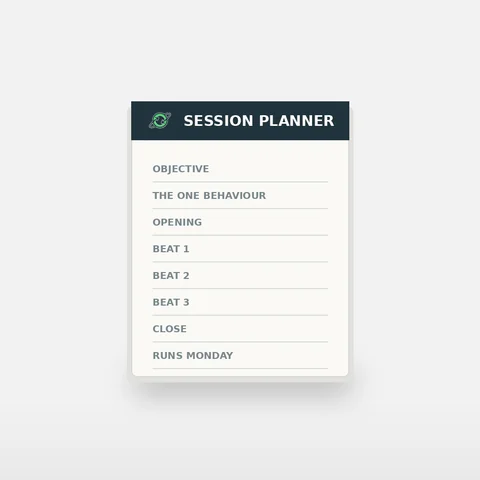


What client problem does this solve, and which tool fixes it?
The client problem. A company rolls out AI tools and sees faster output. Six months later, managers say people struggle when the tool is wrong or unavailable. Leaders ask whether to cut training, because “AI does it now.”
How this article fixes it. It shows the evidence that AI can thin out skills, gives a keep, assist, hand off rule for deciding what to practice by hand and describes a practice-first session that protects the skills that matter.
The tools. The free Live Session Design Canvas and Run-of-Show ($0+) builds a no-AI practice block into the agenda. The AI Meeting Recap and Action Item Prompts ($7) covers the chores you can safely hand off. The Training Evaluation Kit: Learning, Not Completion ($29) checks what people can do without help. To design this with you, Book a free consult.


What is the evidence that AI can thin out skills?
Two pieces are worth knowing, and each has limits. Bastani and colleagues studied nearly 1,000 high school math students in Turkey, in work published in PNAS in 2025. Students with open AI access did 48 percent better while practicing, then 17 percent worse on an exam taken without AI. Students with a tutor version that gave hints instead of answers did 127 percent better in practice and about the same as the control group on the exam. The subjects were students, not employees, so treat it as evidence about a mechanism.
The BCG Henderson Institute reports a global study of 70 senior executives. Half said they already see de-skilling in their organizations, and more than 60 percent expect it to be a material threat within three to five years. The authors call the broader pattern distributed de-skilling and describe a related problem, cognitive debt.
I use two working terms. Skill erosion is losing skills you already have. Learning debt is skipping the practice that would have built a skill in the first place. Both come from letting a tool do the part that builds the skill.
Which skills are at risk in training and facilitation work?
This list is my judgment from the work. It names the places where doing the task by hand builds the skill.
- Writing objectives. Deciding what people will do differently is the core design act.
- Designing an activity. Fitting an exercise to a group builds the sense for what works.
- Reading the room. Noticing who has gone quiet needs live attention, not a summary afterward.
- Giving feedback. Putting a hard point in your own words is a skill that fades if a tool always does it.
- Handling a hard moment. Judgment under pressure needs real repetitions.
What AI cannot do in a live session covers why the live part stays human.
How do you decide what to keep, assist or hand off?
Sort each task into one of three buckets before you add AI to it. The sort takes five minutes a task.
- Keep. Do it by hand first. Use this for the skills in the list above and for any task where a mistake is costly or hard to spot.
- Assist. Try it yourself, ask the tool, then compare the two. Use this for drafts you will still own, such as an agenda.
- Hand off. Let the tool do the chore, such as turning notes into a recap or reformatting a document.
The question to ask for any task is: if this person never practiced it again, would we be worse off in a year? If yes, keep it. What to draft with AI and what not to and where L&D should use AI first go deeper on the sort.
What does a practice-first session look like?
Build the order into the agenda. For any skill you are teaching, run it in three rounds.
- Attempt. People try the task alone for ten minutes with no AI.
- Assist. They ask the tool for help, using a prompt that asks for hints or critique, not a finished answer.
- Compare. In pairs they compare their own attempt with the assisted version and name what the tool added and what it missed.
The Bastani result is the reason for the prompt rule: the tutor version, which gave hints, protected exam performance, and open access did not. Ask the tool to question and critique, not to solve.


How do you spot erosion early?
Add one unaided check to your follow-up. At day 30, ask people to do a short, real task without the tool and compare it with their baseline from the session. Look for three signs: slower first attempts, weaker explanations of why, and more reliance on the tool for tasks they used to do alone.
Ask managers one question: where have you seen someone stuck when the tool failed? Treat the answers as a signal, not proof. The Training Evaluation Kit: Learning, Not Completion ($29) has sheets for a behavior check, and a 15 minute group conversation at day 30 often surfaces the same thing.
What do you tell leaders who only see the speed gain?
Agree that the speed is real, then name the cost in their terms: a hard case that nobody can handle, or a junior person who never builds judgment because the tool does the early work. Offer a small, cheap protection: one practice block per skill and one unaided check per quarter.
The aim is not to slow AI use. It is to keep a human who can tell when the tool is wrong. Keep the ask small enough to say yes to, and show the first unaided check as evidence. AI upskilling is a facilitation problem makes the wider case.
Protect one skill this month
AI belongs in your work. The question is which skills you will still be able to do without it. Pick one core skill, run the attempt, assist and compare rounds in your next session and check it unaided at day 30.
To design a session that builds skill with AI, not instead of it, Book a free consult or book a course.
Where these facts come from
The student study is Bastani et al., “Generative AI without guardrails can harm learning: Evidence from high school mathematics,” Proceedings of the National Academy of Sciences, volume 122, 2025, listed at EconPapers. The percentages and sample size are as reported by Knowledge at Wharton. The executive survey and the terms distributed de-skilling and cognitive debt come from the BCG Henderson Institute, When Everyone Uses AI, Companies Risk Losing Critical Skills. My working terms skill erosion and learning debt, the at-risk list, the keep, assist, hand off rule and the practice-first session are my own practice and opinion, not research findings. I confirmed the sources on November 13, 2026.
Keep going
More on AI in training and meetings
What to draft with AI and what not to
A sort you can use today.
Where L&D should use AI first
Start with the chores.
AI upskilling is a facilitation problem
Practice, not slides.